

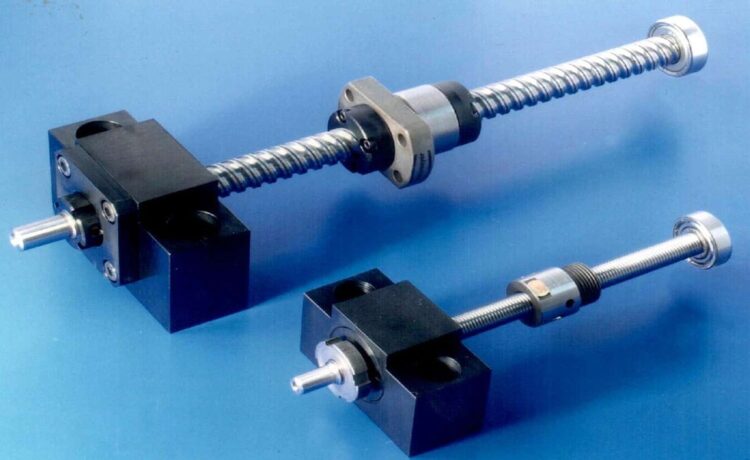
In the complex ecosystem of CNC machinery and industrial automation, the stability of a rotating ball screw is non-negotiable. Without a robust support system, even the highest quality screw will suffer from vibration, deflection, and premature wear. This is why the FK type shaft end support bearing (known in Thai as ลูกปืนจับยึดปลายเพลา FK) is considered a cornerstone of linear motion engineering. These support units are designed to house angular contact bearings that can handle both axial and radial loads, ensuring that the shaft remains perfectly aligned during high-speed operations.
However, engineers often face a dilemma when choosing between General Grade and High Precision Grade units. While they may look identical on the surface, the internal tolerances and material qualities vary significantly. Choosing the right grade is a strategic balancing act between operational requirements, budget constraints, and the long-term accuracy demands of the manufacturing process.
1. General Grade: The Cost-Effective Solution for Standard Automation
For many general-purpose industrial applications where extreme precision is not the primary driver, the General Grade FK type shaft end support bearing offers an excellent balance of performance and value. These units are typically manufactured to meet standard industrial tolerances (often P0 or Class 0), making them suitable for a wide range of non-critical machinery.
Key Features and Benefits of General Grade:
Economical Implementation: The primary advantage of General Grade units is their lower initial cost. This makes them the ideal choice for budget-conscious projects, DIY CNC builds, or auxiliary systems where the mechanical stakes are relatively low.
Standard Load Handling: While they may not offer “micrometer” precision, they are perfectly capable of supporting standard axial loads in conveyor systems, packaging machines, and simple automated jigs.
Ease of Replacement and Sourcing: General Grade units follow universal mounting dimensions, ensuring that they are easily interchangeable with various brands. This reduces the “trick” headache of specialized sourcing during routine maintenance.
Durability in Non-Extreme Environments: In environments where speeds are moderate and temperature fluctuations are minimal, these bearings provide a reliable service life without the need for the premium price tag associated with high-grade counterparts.
Simplified Installation: Because the tolerances are more relaxed, these units are often more forgiving during the assembly process, requiring less specialized equipment to achieve a functional alignment within standard operating parameters.
Choosing a General Grade unit is a smart tactical move for operations that prioritize high-volume production with standard accuracy requirements, allowing for efficient resource allocation across the facility.
2. High Precision Grade: Engineered for Accuracy and High-Speed Stability
When the application involves high-speed machining, medical equipment, or semiconductor manufacturing, only a High Precision Grade FK type shaft end support bearing will suffice. These units are often rated at P5, P4, or even higher accuracy classes, featuring internal bearings with much tighter clearances and superior surface finishes.
Key Features and Benefits of High Precision Grade:
Superior Positional Accuracy: The “trick” to high-end CNC performance lies in minimizing axial play. High precision units utilize matched sets of angular contact bearings to ensure that the ball screw moves exactly as commanded by the controller, down to the micron level.
Enhanced High-Speed Stability: At high RPMs, even a microscopic imbalance can lead to heat and vibration. High Precision units are dynamically balanced and precision-ground, allowing them to operate at elevated speeds while maintaining thermal stability.
Increased System Rigidity: The internal components are designed for higher stiffness, which is essential for preventing shaft deflection under heavy cutting loads. This rigidity directly translates to a better surface finish on the final manufactured parts.
Reduced Friction and Heat Generation: Through advanced raceway grinding and specialized lubrication, these bearings minimize internal friction. This prevents the ball screw from expanding due to heat, which is a common cause of positional drifting in precision work.
Extended Operational Longevity: While the upfront cost is higher, the use of premium bearing steel and superior sealing technology means these units often outlast general grades in demanding environments, offering a lower total cost of ownership over time.
For industries that cannot afford a single millimeter of error, investing in a High Precision Grade FK type shaft end support bearing is a strategic necessity that guarantees the integrity of the final product and the reputation of the manufacturer.
Deciding between General Grade and High Precision Grade requires a thorough analysis of your machine’s intended output and duty cycle. While General Grade units are the workhorses of standard industry, High Precision units are the precision instruments that drive innovation. Regardless of your choice, the quality of the FK type shaft end support bearing is the single most important factor in protecting your ball screw from mechanical failure. A high-quality support unit doesn’t just hold a shaft; it secures the accuracy of your entire production line.
At I.N.B, we specialize in providing the Thai industrial sector with a comprehensive range of motion control solutions that meet every engineering standard. We understand that selecting the right grade is the “trick” to maximizing equipment uptime. Our team of experts is dedicated to helping you identify the specific FK type shaft end support bearing that aligns with your technical requirements and long-term business goals.